
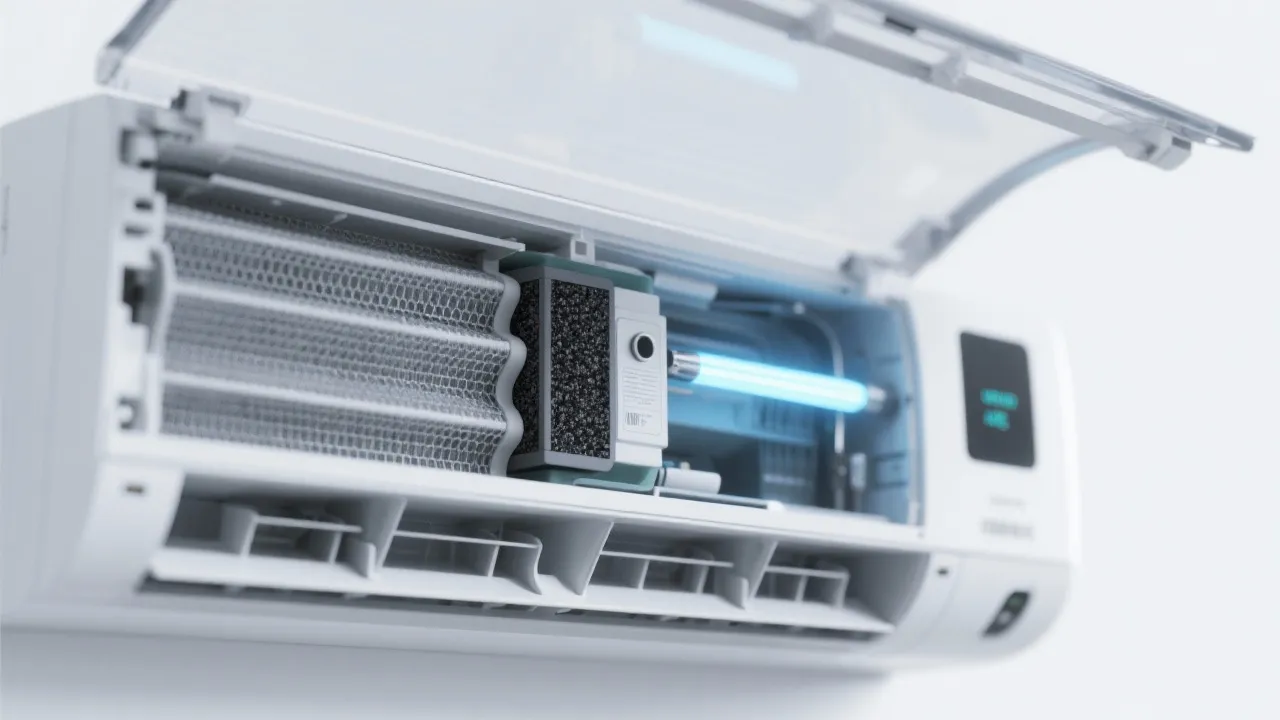
In the pursuit of cleaner indoor air, selecting an air purifier that perfectly fits your room size is essential. Whether you are managing a home, office, or hotel environment, aligning the purifier’s Clean Air Delivery Rate (CADR) with your specific space ensures efficient pollutant removal without wasting energy or underperforming. This guide dives into how to accurately match CADR values with room dimensions, taking into account pollutant types and usage patterns, empowering you to make informed decisions supported by real-world scenarios.
CADR measures an air purifier’s ability to remove specific pollutants (like dust, smoke, and pollen) from the air, expressed in cubic meters per hour (m³/h) or cubic feet per minute (CFM). For effective air cleaning, the purifier’s CADR should be tailored to your room's volume — calculated by multiplying floor area by ceiling height. For example, a 20㎡ room with a 2.5m ceiling has a volume of 50m³.
The general rule is that the CADR should be at least two-thirds of the room volume in cubic meters per hour. This ensures the device cycles through the full room air multiple times per hour for noticeable improvement.
Different environments present distinct air quality challenges. For newly renovated rooms, formaldehyde and volatile organic compounds (VOCs) dominate, requiring activated carbon filters alongside HEPA to capture gases and odors. Infant rooms focus more on PM2.5, demanding high-efficiency HEPA filters to protect vulnerable lungs, whereas office spaces with heavy foot traffic often suffer from dust and odor buildup, making multi-stage filtration essential.
Your daily routine impacts which air purifier features you’ll value most. Busy professionals benefit from smart purifiers with remote control and filter replacement reminders to maintain air quality consistently without manual intervention. Silent operation modes are a plus for bedrooms or hotels where low noise is critical. For high-use areas, units with robust motor power and adjustable fan speeds extend filter lifespan and optimize energy use.
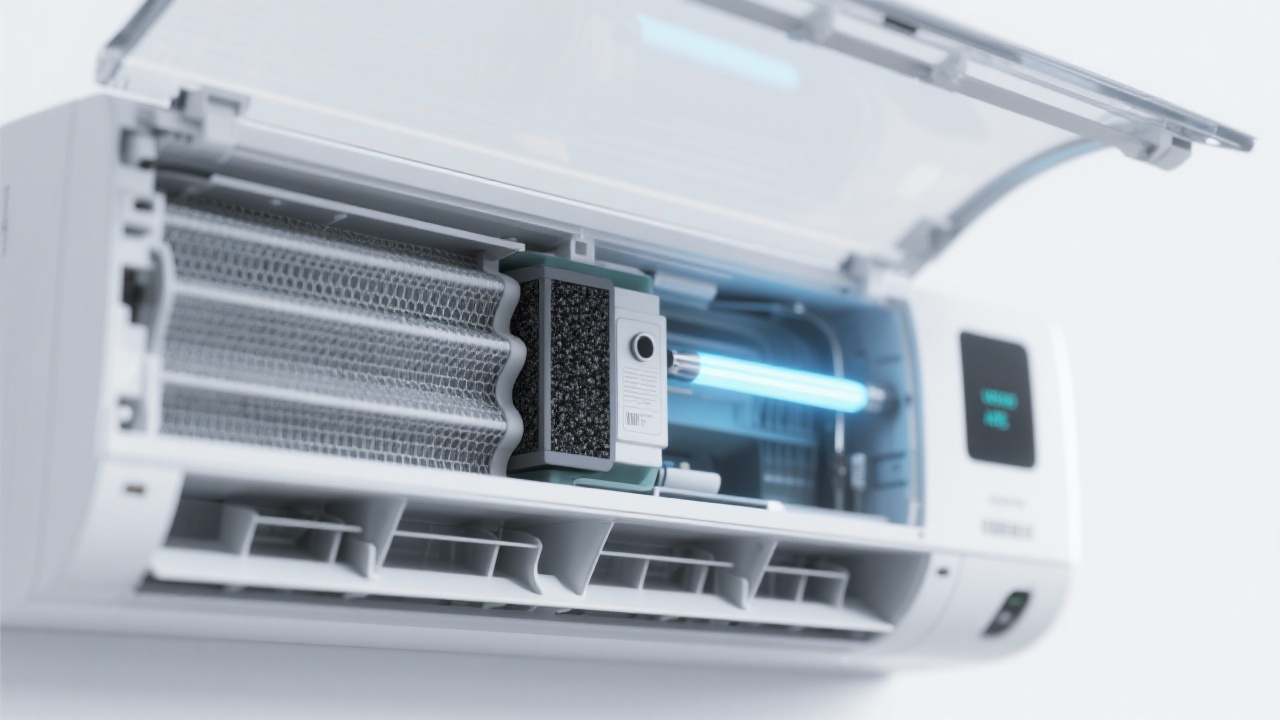
Here’s a concise guideline you can apply:
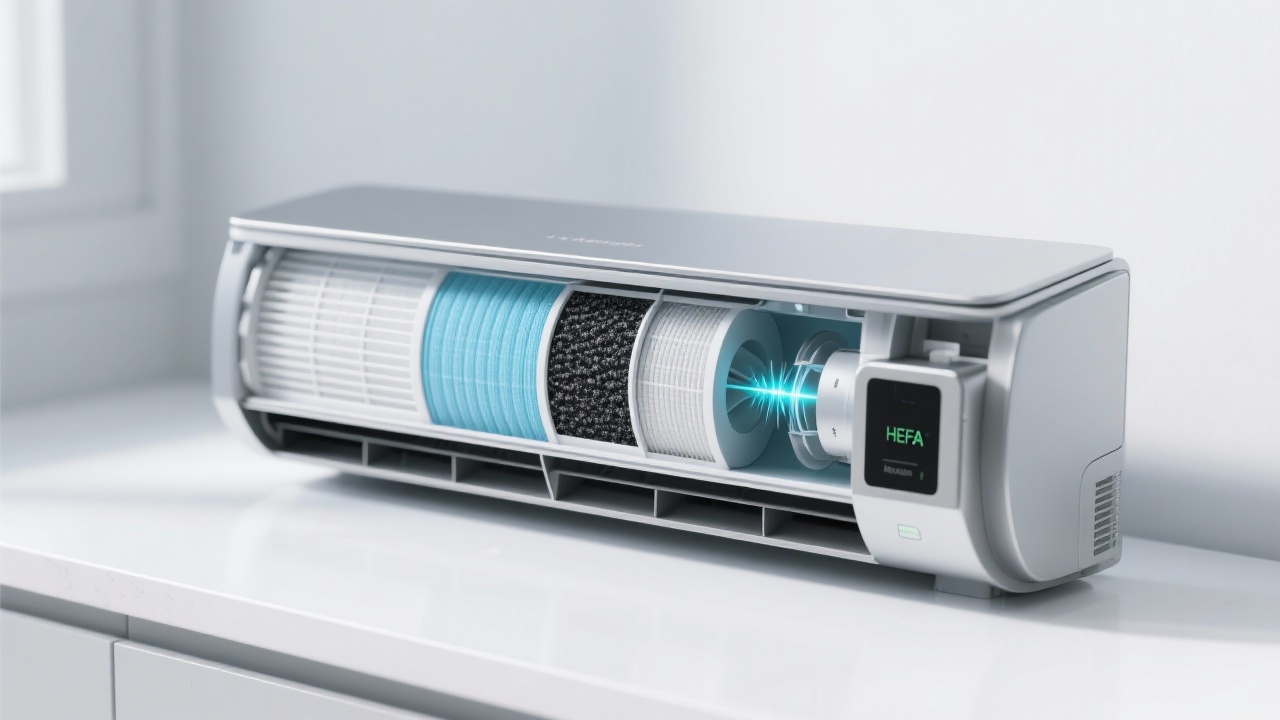
Take the example of a newly renovated family apartment: lingering formaldehyde can severely impact health if not addressed with sufficient filtration capacity. In an infant's room, a small but high-efficiency purifier running quietly around the clock provides safer breathing conditions. Meanwhile, a busy office often requires a larger capacity model with real-time pollution sensors to cope with continuous human activity and pollutant influx.
Matching the CADR value correctly means you avoid underpowered purifiers that fail to reduce pollutants or oversized units that drive up costs and noise.
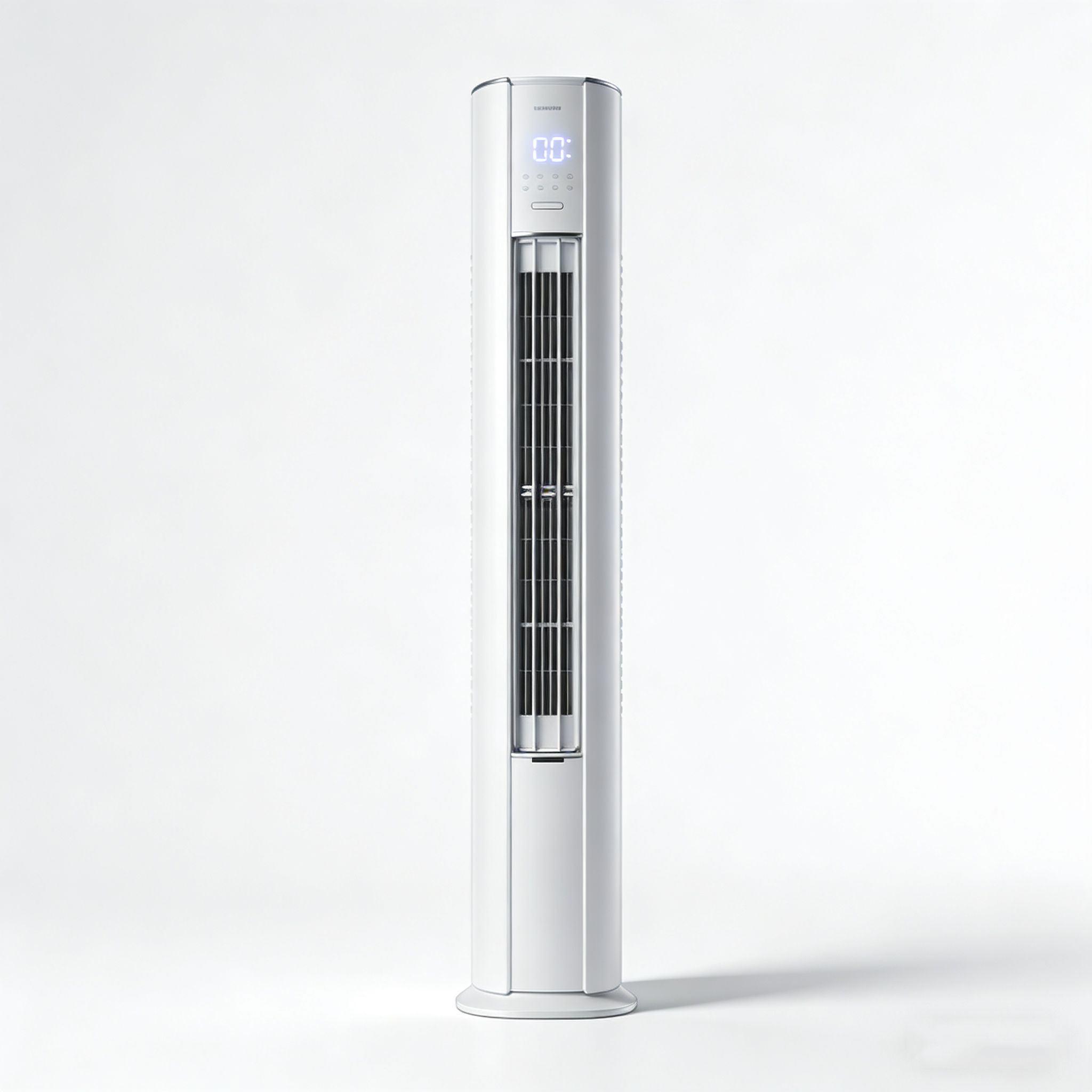
Today’s intelligent air purifiers integrate Wi-Fi capabilities allowing remote control via apps—ideal for busy individuals who need to adjust settings on-the-go. Filter replacement alerts help maintain optimal performance without guesswork. Low noise modes ensure the purifier supports restful sleep or quiet office workflows without disturbance.
 233
|
233
|
 Smart lock compatibility
Silent lock core design
Remote access control management
Standard door type adaptation
Smart home integration
285
|
AI food recognition technology
commercial kitchen food management
food waste reduction
intelligent food management refrigerator
kitchen inventory optimization
166
|
smart lock unlocking methods
fingerprint recognition locks
bluetooth smart locks
access control security
multi-method unlock synergy
74
|
silent energy-efficient refrigerator
dual inverter compressor noise reduction
smart refrigerator quiet technology
refrigerator energy-saving tips
quiet home appliances
153
|
AI food recognition technology
commercial kitchen food management
reduce food waste
smart refrigerator solutions
ERP system integration
Smart lock compatibility
Silent lock core design
Remote access control management
Standard door type adaptation
Smart home integration
285
|
AI food recognition technology
commercial kitchen food management
food waste reduction
intelligent food management refrigerator
kitchen inventory optimization
166
|
smart lock unlocking methods
fingerprint recognition locks
bluetooth smart locks
access control security
multi-method unlock synergy
74
|
silent energy-efficient refrigerator
dual inverter compressor noise reduction
smart refrigerator quiet technology
refrigerator energy-saving tips
quiet home appliances
153
|
AI food recognition technology
commercial kitchen food management
reduce food waste
smart refrigerator solutions
ERP system integration


