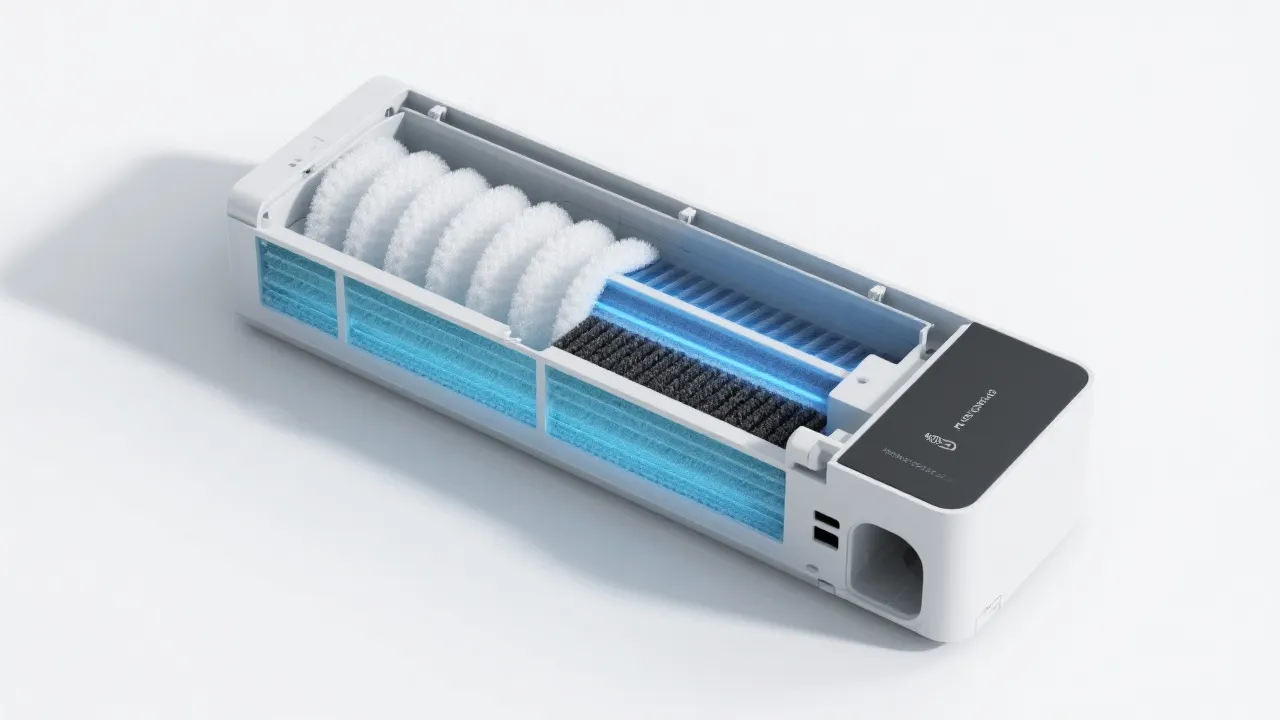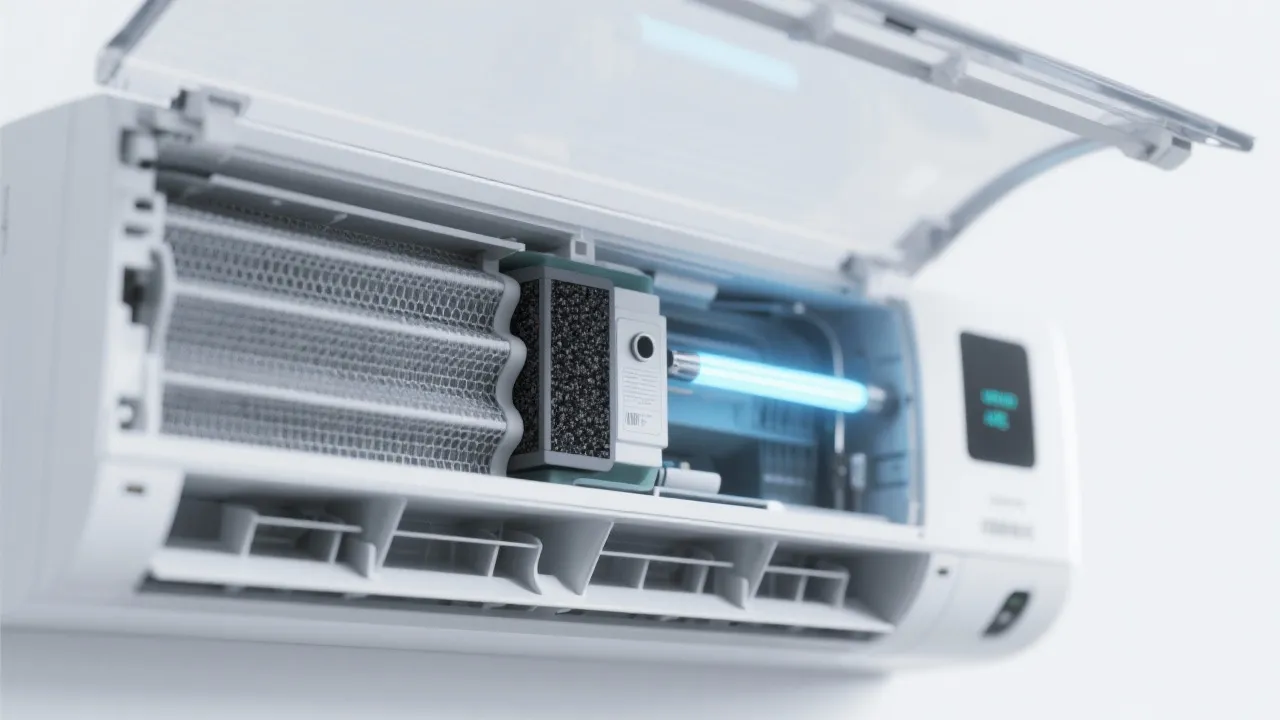

Selecting an air purifier that matches your room's dimensions is fundamental to maintaining optimal indoor air quality. CADR (Clean Air Delivery Rate) serves as the primary technical benchmark indicating an air purifier’s effectiveness in cleaning air in a given space. Understanding the relationship between your room’s volume and the CADR value, alongside other factors like pollutant types and usage habits, ensures you make an efficient and cost-effective choice.
Room volume, typically calculated by multiplying floor area by ceiling height, directly influences the required CADR value for an air purifier. For example, a 20 m² room with a standard ceiling height of 2.5 meters equates to a volume of 50 m³. To maintain clean air effectively, the air purifier should ideally cycle the entire room’s air at least 4 to 5 times per hour.
The CADR value, expressed in cubic meters per hour (m³/h) or cubic feet per minute (CFM), reflects how much contaminant-free air the device can deliver. A simplified formula to select the appropriate CADR is:
Required CADR = Room Volume (m³) × Air Changes per Hour (ACH)
For residential spaces, an ACH of 4 to 5 is recommended. Hence, for a 50 m³ room, a CADR of 200~250 m³/h is suitable to ensure rapid and thorough purification.
Different indoor pollutants require specific filtration technologies and influence CADR requirements. Common pollutants include:
Higher pollutant concentrations or persistent sources might necessitate an air purifier with a slightly larger CADR to maintain consistent air quality.
Modern intelligent air purifiers integrate sophisticated technologies that bring convenience and efficiency into daily life:
Smart air purifiers like those from 智境生活 (Zhijing Living) leverage precise detection and remote control capabilities to provide tailor-made air management solutions for dynamic environments.
| Room Area (m²) | Room Volume (m³) | Recommended CADR (m³/h) | Typical Use Case |
|---|---|---|---|
| 10 | 25 | 100~125 | Small bedroom or study |
| 20 | 50 | 200~250 | Standard living room |
| 40 | 100 | 400~500 | Open plan office or large family room |
Using an air purifier with a CADR too low for the room size results in inadequate air purification, leaving pollutants circulating and diminishing health benefits. Conversely, a purifier with excessively high CADR for a small room may consume unnecessary energy, generate excessive noise, and increase filter replacement costs without any practical advantage.
Therefore, aligning CADR to your specific room volume and pollutant situation strikes a balance between performance and efficiency.
Smart air purifiers offer the best of both worlds: tailored performance and convenience. Their intelligent controls adjust purification dynamically, ensuring your indoor air remains fresh while optimizing energy use.
Consider the example of a family with a 30 m² living room suffering from persistent PM2.5 pollution during city haze seasons. Selecting a purifier rated at 350 m³/h with HEPA and activated carbon filters transformed their indoor air quality within days, according to user feedback. Additionally, the unit’s quiet mode ensured peaceful evenings without disturbance.
Another case involved a hotel chain upgrading rooms with smart air purifiers featuring remote monitoring and real-time filter status that enabled maintenance teams to streamline servicing, reducing downtime and enhancing guest satisfaction.
Choosing an air purifier is more than just picking the highest CADR or brand name; it involves balancing indoor volume, pollutant types, noise tolerance, and smart features that fit your lifestyle or business needs. With credible data and the latest technology, brands like 智境生活 provide efficient solutions tailored for residential, office, and hospitality spaces.
Considering these factors helps avoid wasted energy and expense while ensuring your air stays clean and healthy.


 72
|
72
|
 Multi - layer air purification
HEPA filter purification effect
Indoor air quality improvement
Air filtration system
Intelligent inverter air conditioner
213
|
air purifier buying guide
CADR value air purifier
smart air purifier for home
indoor air quality improvement
office and hotel air purification
38
|
Multi - layer air purification
HEPA filter purification effect
Improvement of indoor air quality
Best practices for filter replacement
Air purification of intelligent variable - frequency air conditioners
455
|
multi-layer air purification
HEPA filter performance
indoor air quality improvement
automatic humidity control
intelligent inverter air conditioner
432
|
Smart lock compatibility
Silent lock cylinder design
Remote access control management
Standard door type adaptation
Smart home integration
Multi - layer air purification
HEPA filter purification effect
Indoor air quality improvement
Air filtration system
Intelligent inverter air conditioner
213
|
air purifier buying guide
CADR value air purifier
smart air purifier for home
indoor air quality improvement
office and hotel air purification
38
|
Multi - layer air purification
HEPA filter purification effect
Improvement of indoor air quality
Best practices for filter replacement
Air purification of intelligent variable - frequency air conditioners
455
|
multi-layer air purification
HEPA filter performance
indoor air quality improvement
automatic humidity control
intelligent inverter air conditioner
432
|
Smart lock compatibility
Silent lock cylinder design
Remote access control management
Standard door type adaptation
Smart home integration