

In today's era, as people's health awareness continues to grow, indoor air quality has become a top concern for consumers. This article delves deep into the multi - layer air purification system technology equipped in smart variable - frequency air conditioners, offering valuable insights into how it enhances indoor air quality.
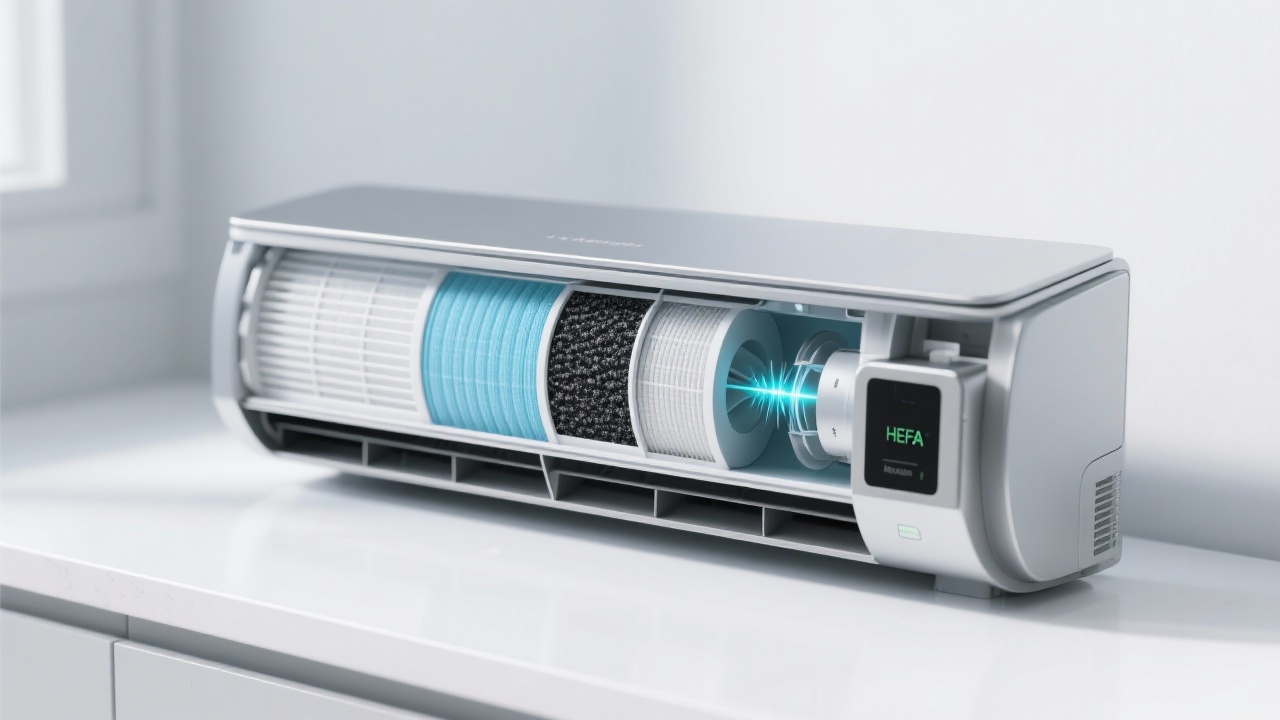
The multi - layer air purification system consists of three main parts: the pre - filter, the HEPA filter, and the activated carbon layer. Each layer plays a crucial and unique role in the air purification process.
The pre - filter is the first line of defense. It is designed to intercept large - sized dust particles such as hair, lint, and big pieces of debris. According to laboratory tests, it can effectively block over 90% of particles larger than 10 microns, preventing them from entering the subsequent filtration layers and extending the service life of other filters.
The High - Efficiency Particulate Air (HEPA) filter is a key component of the system. It can filter extremely fine particles, including PM2.5, pollen, and dust mites. In a sealed environment of about 20 square meters, the HEPA filter can reduce PM2.5 levels by up to 95% within two hours, making the air cleaner and healthier to breathe. It also effectively filters out common allergens, providing a more comfortable living or working environment for allergy - prone individuals.

The activated carbon layer is responsible for adsorbing odors and harmful gases such as formaldehyde, benzene, and ammonia. With its large surface area and porous structure, it has a strong adsorption capacity. In a test environment with a certain concentration of formaldehyde, the activated carbon layer can reduce the formaldehyde level by about 80% in a short period, effectively removing unpleasant odors and improving the overall air freshness.
These three layers work in tandem. The pre - filter first removes large particles, then the HEPA filter captures fine particles, and finally, the activated carbon layer deals with odors and harmful gases. This coordinated operation ensures comprehensive air purification.
It is essential for users to know how to identify the performance of different filters. For example, a high - quality HEPA filter should have a high filtration efficiency and low air resistance. When evaluating, one can refer to the MERV (Minimum Efficiency Reporting Value) rating. A higher MERV rating indicates better filtration performance.
In terms of maintenance, the pre - filter can be cleaned every 1 - 2 months by gently vacuuming or washing with water. The HEPA filter usually needs to be replaced every 6 - 12 months, depending on the usage environment. The activated carbon layer should be replaced every 3 - 6 months to maintain its adsorption capacity.
In addition to air purification, automatic humidity control is also an important part of the indoor environment management. The smart variable - frequency air conditioner can adjust the indoor humidity according to the set parameters. Maintaining an appropriate humidity level (usually between 40% - 60%) can not only enhance the comfort of the indoor environment but also help the air purification system work more effectively. For example, in a more suitable humidity environment, the dust particles are less likely to be suspended in the air, making it easier for the filters to capture them.
Many users have left positive feedback about the air purification and humidity control functions of the smart variable - frequency air conditioners. For instance, a user from the United States said, "Since I installed this air conditioner, the air in my home has become much fresher, and I no longer feel stuffy. The humidity control also makes my skin feel more comfortable."
If you are eager to upgrade your indoor air quality and enjoy a healthier living or working environment, take the first step now. Click here to learn more about our smart variable - frequency air conditioners with advanced multi - layer air purification systems.
 186
|
186
|
 smart ptz camera permission settings
multi user remote access
enterprise camera management
ai security camera access
360 degree surveillance system
98
|
multi-layer air purification
HEPA filter effectiveness
indoor air quality improvement
smart inverter air conditioner
filter maintenance tips
358
|
air filter replacement cycle
HEPA filter performance
multi-stage air purification
indoor air quality improvement
HVAC filter maintenance
387
|
smart PTZ camera installation
360 degree surveillance setup
cloud camera angle adjustment
AI motion detection tuning
night vision optimization
185
|
smart PTZ camera installation
PTZ camera angle optimization
retail store security cameras
night vision camera settings
remote surveillance system
smart ptz camera permission settings
multi user remote access
enterprise camera management
ai security camera access
360 degree surveillance system
98
|
multi-layer air purification
HEPA filter effectiveness
indoor air quality improvement
smart inverter air conditioner
filter maintenance tips
358
|
air filter replacement cycle
HEPA filter performance
multi-stage air purification
indoor air quality improvement
HVAC filter maintenance
387
|
smart PTZ camera installation
360 degree surveillance setup
cloud camera angle adjustment
AI motion detection tuning
night vision optimization
185
|
smart PTZ camera installation
PTZ camera angle optimization
retail store security cameras
night vision camera settings
remote surveillance system


