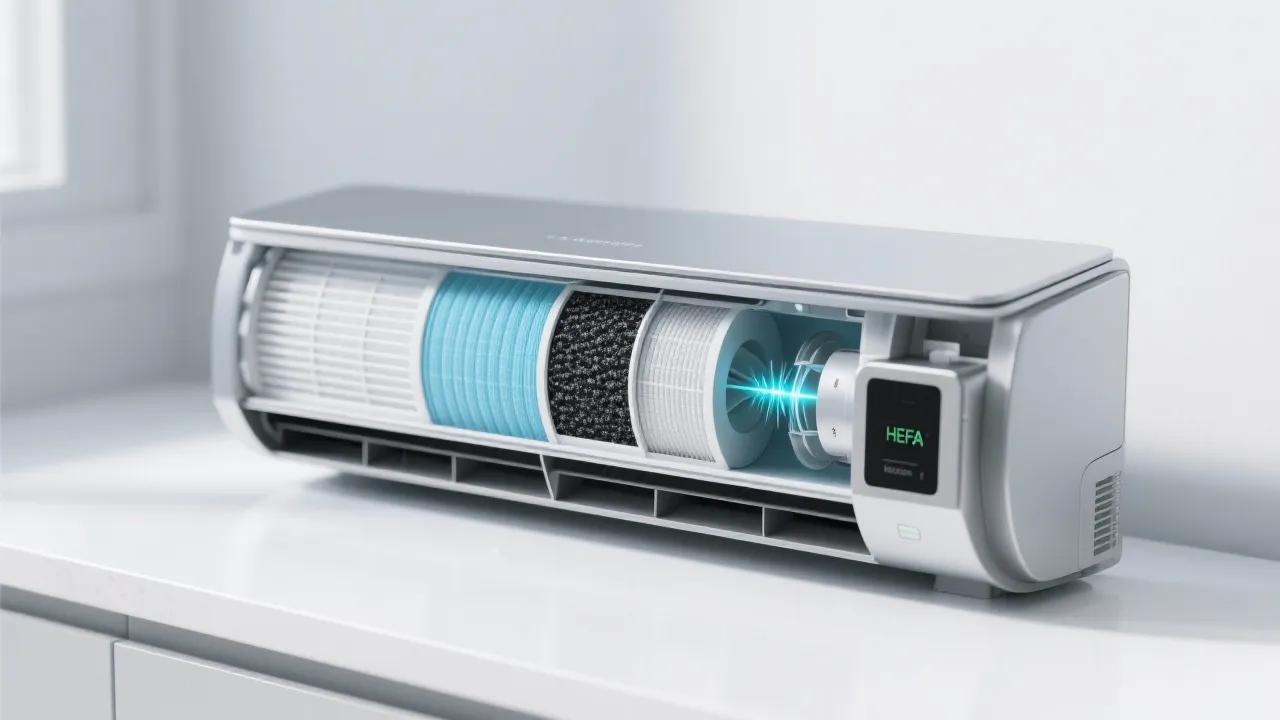
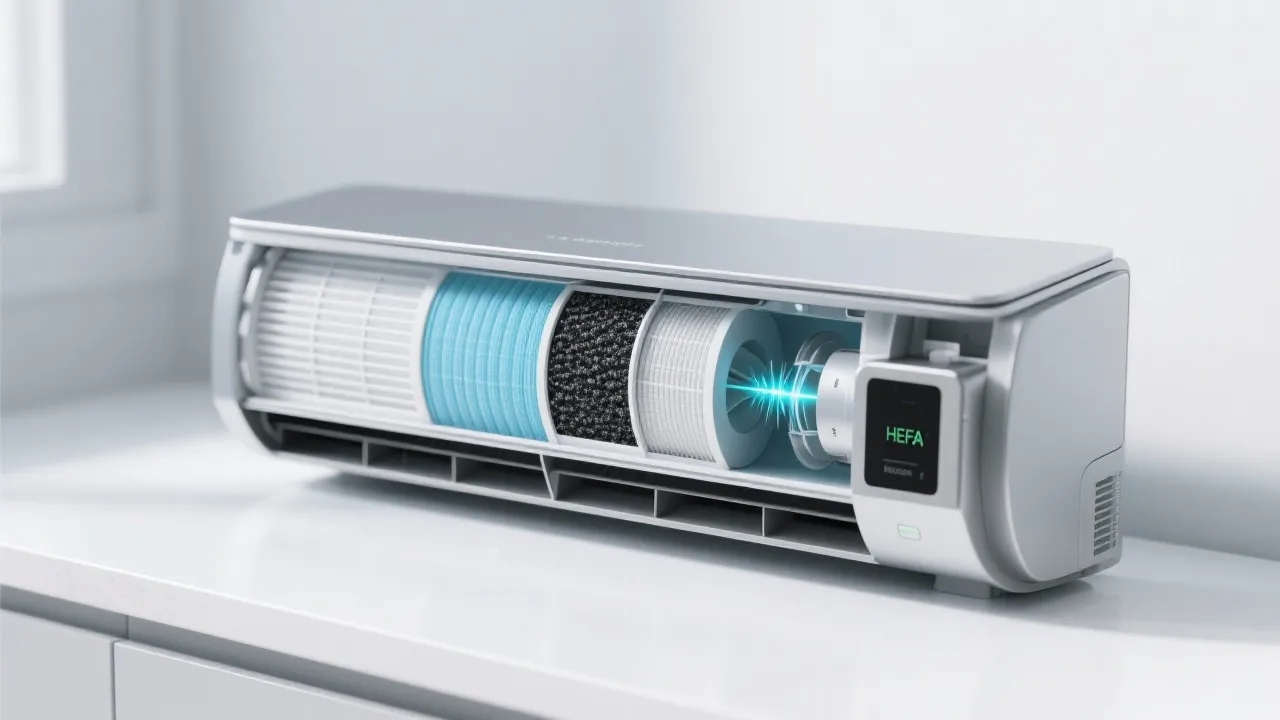
In today’s global landscape, the demand for intelligent air purifiers equipped with advanced multi-stage filtration systems has surged across homes, offices, and hotels worldwide. For manufacturers and distributors aiming at overseas markets, understanding the technical principles behind these systems can unlock significant competitive advantages. This article unpacks how various filtration stages—namely pre-filters, HEPA H13/H14 filters, and activated carbon layers—collaborate, boosted by smart sensor technologies, to deliver cleaner, safer indoor air.
Multi-stage filtration integrates multiple layers designed to target different pollutants effectively. Initially, a pre-filter captures large particles such as dust and pet hair, prolonging the life of downstream filters. Following this, the core HEPA filters—ranging from H13 to H14 grade—work to remove the microscopic particulate matter (PM2.5) with an efficiency reaching up to 99.97%. The final stage involves an activated carbon filter that excels at adsorbing volatile organic compounds (VOCs), odors, and harmful gases, which traditional particulate filters cannot capture.
Did you know? The combination of HEPA H13/H14 filters and activated carbon layers is essential to address both particulate pollution and chemical contaminants simultaneously — improving indoor air quality beyond conventional standards.
Pre-Filter: This washable or replaceable mesh traps larger debris, enabling the main HEPA filters to maintain peak efficiency longer while reducing maintenance frequency.
HEPA H13/H14 Filters: Certified under European Norm EN 1822 standards, these filters remove ≥99.95% (H13) and ≥99.995% (H14) of airborne particles as small as 0.3 microns, effectively capturing allergens, pollen, and fine dust responsible for respiratory issues.
Activated Carbon Filter: High-surface area carbon granules adsorb VOCs like formaldehyde, benzene, and ammonia, along with household odors and chemical gases frequently present in indoor environments.
Together, these layers form a robust defense mechanism tackling airborne hazards from physical particulates to invisible chemical toxins. The performance is often validated by international certifications such as CE marking, AHAM, and rigorous lab testing, assuring buyers of safety and efficacy.
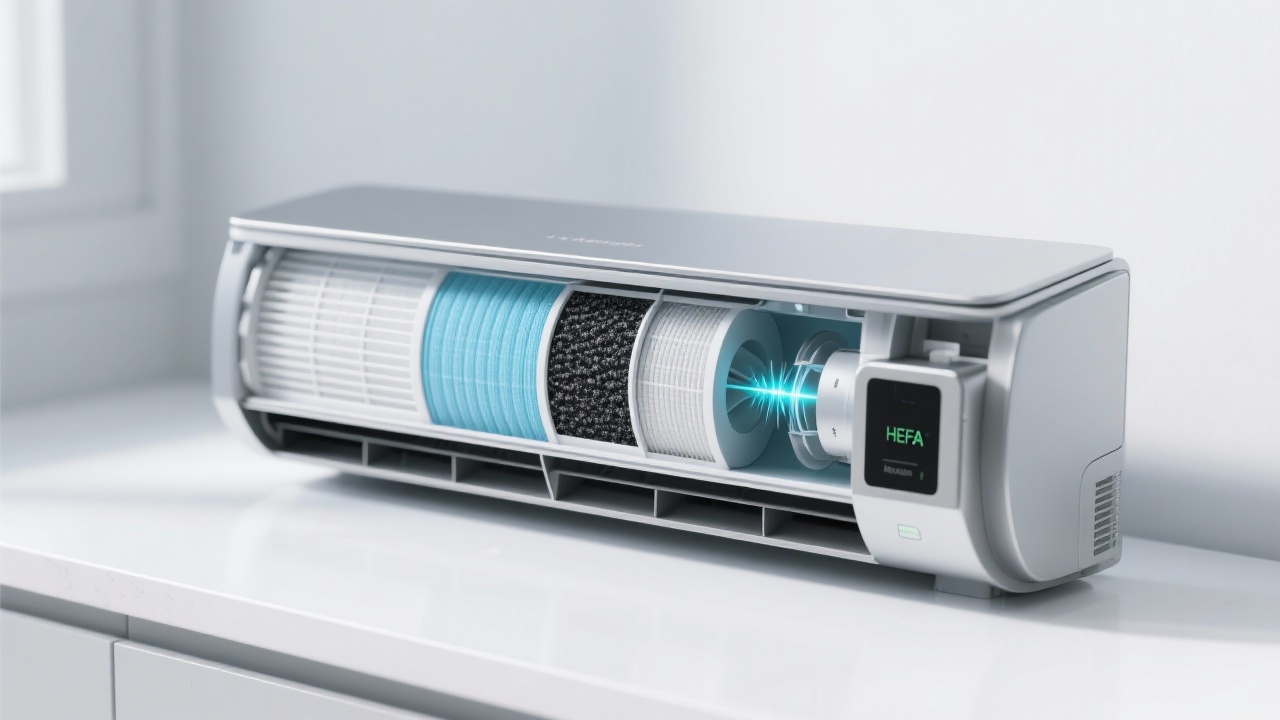
Modern air purifiers often incorporate high-precision sensors monitoring PM2.5 levels, VOC concentrations, temperature, and humidity. These sensors feed data into intelligent control systems allowing automatic filtration adjustments or remote management through mobile apps.
For example, when PM2.5 levels spike, the purifier can boost fan speeds instantly. Users can also receive notifications about filter replacement timing and air quality trends, enabling proactive maintenance and optimized device lifespan.
Have you checked your indoor air quality recently? Smart purifiers with sensor feedback provide both protection and peace of mind.
Different environments demand customized approaches to air purification. For instance:
Industry tests reveal that properly matched multi-stage filtration units reduce PM2.5 levels indoors by over 85% within 30 minutes, significantly improving air safety in these diverse scenarios.
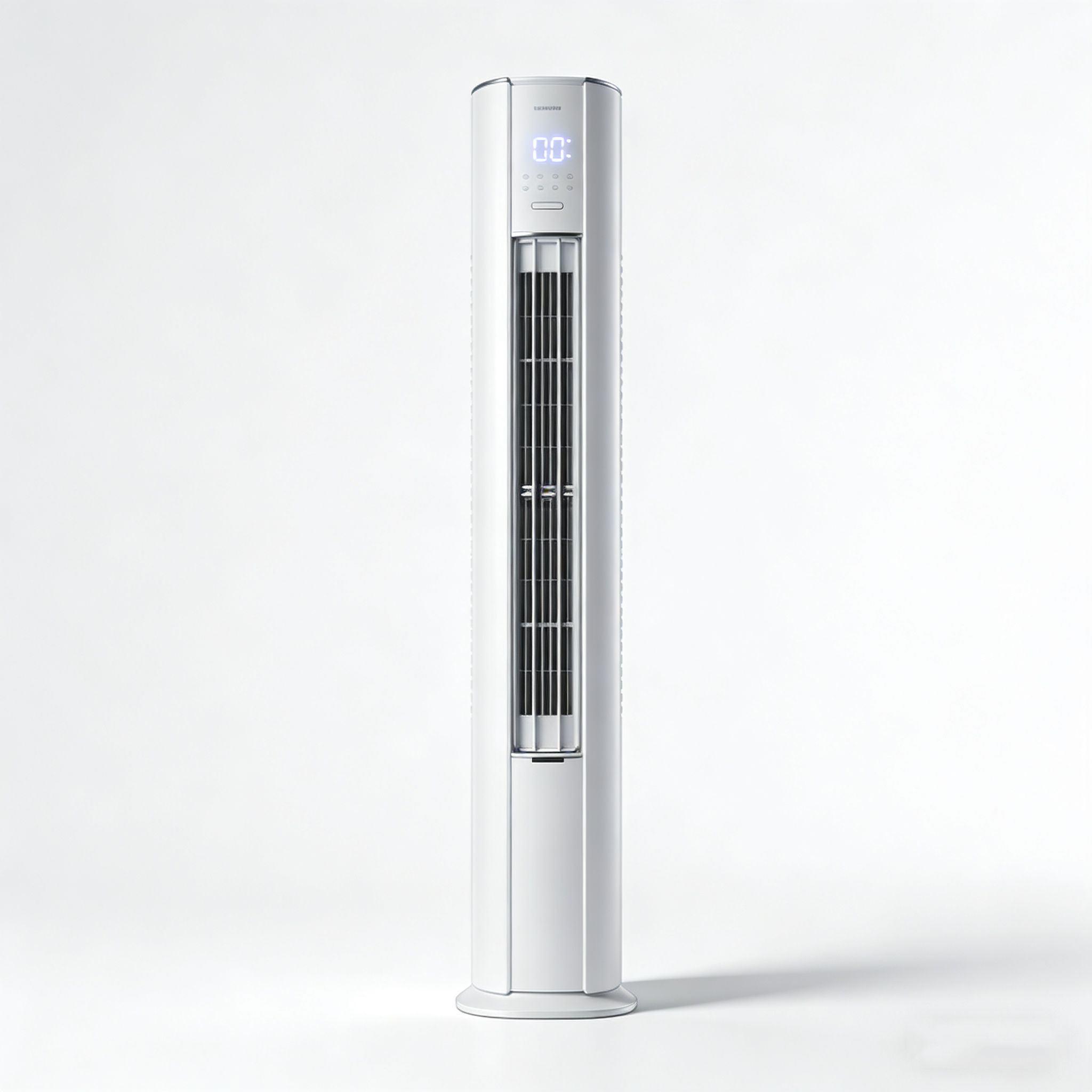
Global buyers often require adaptation to regional standards, design preferences, and specific air quality challenges. Leading brands like 智境生活 (Zhijing Life) offer extensive OEM/ODM services providing:
This flexibility empowers international distributors and retailers to differentiate their offerings, enhancing customer trust and satisfaction.

 285
|
285
|
 AI food recognition technology
commercial kitchen food management
food waste reduction
intelligent food management refrigerator
kitchen inventory optimization
226
|
air purifier selection
indoor air quality
smart air purifiers
CADR matching
remote control air purifier
166
|
smart lock unlocking methods
fingerprint recognition locks
bluetooth smart locks
access control security
multi-method unlock synergy
435
|
Smart lock anti - tampering technology
Lock security design
Home security upgrade
Encrypted communication technology
Anti - prying alarm system
194
|
tamper-resistant touchscreen smart lock
ZJ-TouchPro100 smart lock security
dynamic password door lock
encrypted communication smart lock
semiconductor fingerprint smart lock
AI food recognition technology
commercial kitchen food management
food waste reduction
intelligent food management refrigerator
kitchen inventory optimization
226
|
air purifier selection
indoor air quality
smart air purifiers
CADR matching
remote control air purifier
166
|
smart lock unlocking methods
fingerprint recognition locks
bluetooth smart locks
access control security
multi-method unlock synergy
435
|
Smart lock anti - tampering technology
Lock security design
Home security upgrade
Encrypted communication technology
Anti - prying alarm system
194
|
tamper-resistant touchscreen smart lock
ZJ-TouchPro100 smart lock security
dynamic password door lock
encrypted communication smart lock
semiconductor fingerprint smart lock