
When selecting an air purifier, matching the unit to your room’s size is crucial for effective air quality improvement. Whether your space is a cozy 20㎡ nursery or a spacious 60㎡ office, understanding the core technical factors like CADR values, filter types, and noise levels can help you avoid energy waste and maximize purification efficiency.
The Clean Air Delivery Rate (CADR) measures the volume of filtered air an air purifier produces per hour, usually denoted in cubic meters per hour (m³/h). To select the right model, calculate the volume of your room (floor area multiplied by ceiling height) and then choose a purifier with a CADR that can clean the entire space at least 4 to 5 times per hour.
For example, a 30㎡ room with a 2.5m ceiling results in a volume of 75m³. Multiplying this by 5 air changes per hour means you should look for a purifier with a CADR of at least 375 m³/h. This ensures the air purifier effectively reduces dust, allergens, and pollutants within the space.
| Room Size (㎡) | Approx. Volume (m³) | Recommended CADR (m³/h) | Typical Use Case |
|---|---|---|---|
| 20 | 50 (20×2.5m ceiling) | ~250 | Nursery, small bedroom |
| 30 | 75 | ~375 | Master bedroom, office room |
| 40 | 100 | ~500 | Larger bedroom, small living room |
| 60 | 150 | ~750 | Office space, hotel room |
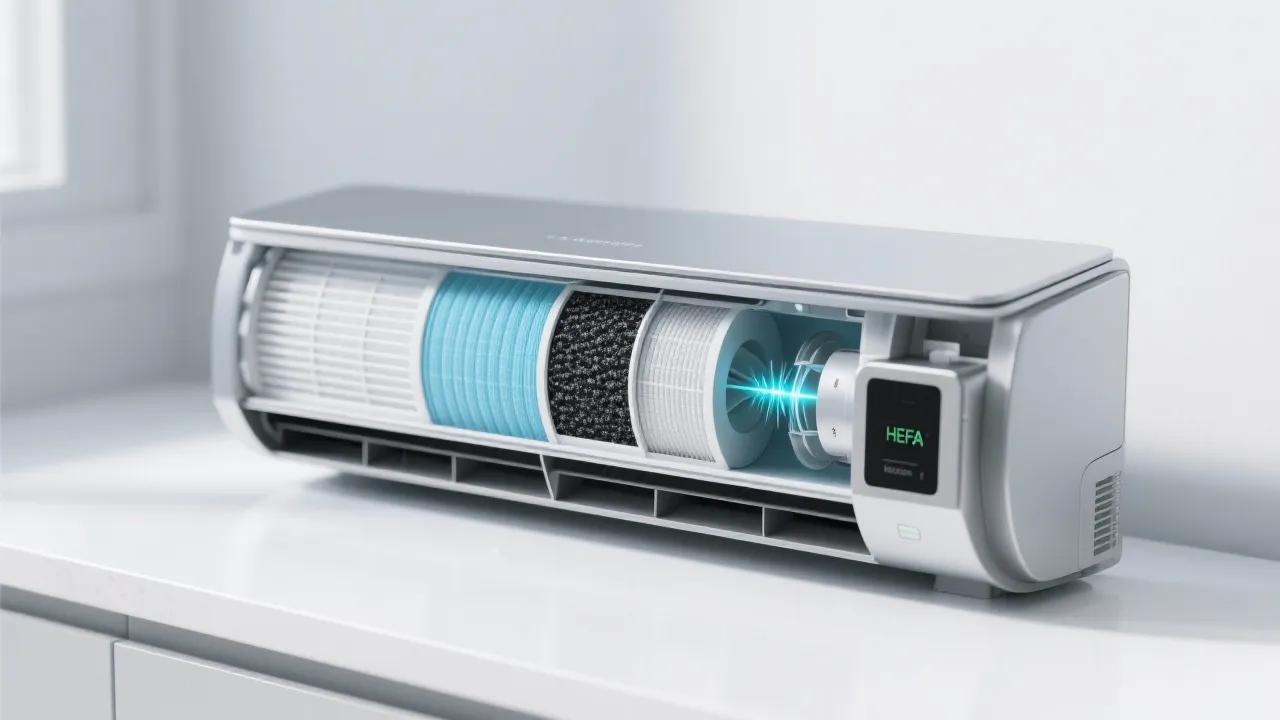
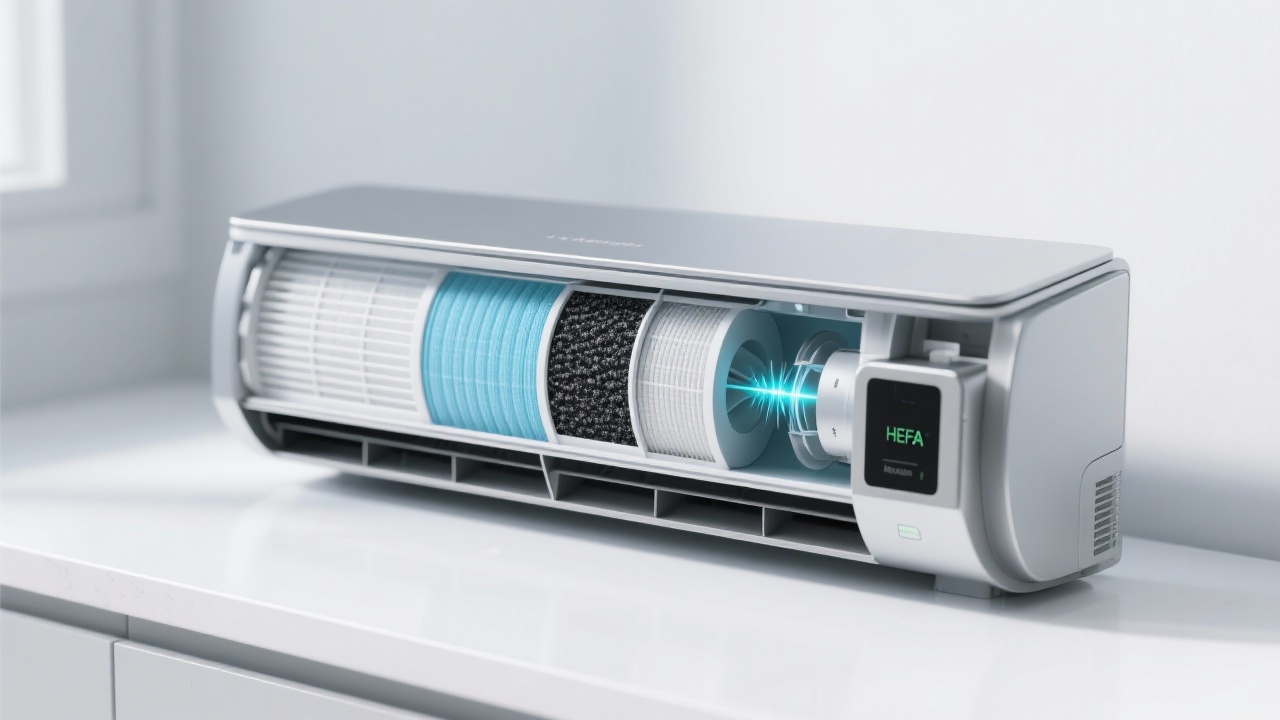
Different indoor pollutants require specific filtration technologies. For everyday dust and allergens like pollen or pet dander, a HEPA filter rated to capture particles as small as 0.3 microns (PM2.5) is essential. If your concern is chemical pollutants such as formaldehyde from new furniture or paint fumes, activated carbon layers designed for gas adsorption become critical.
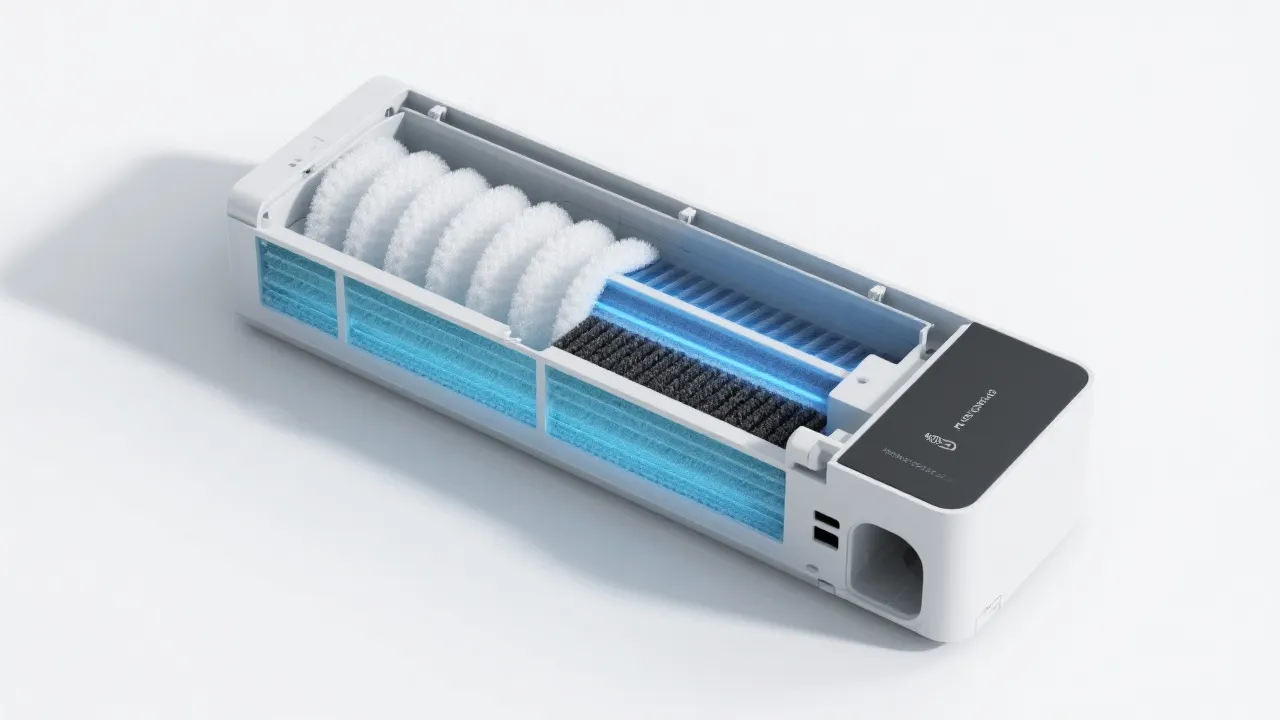
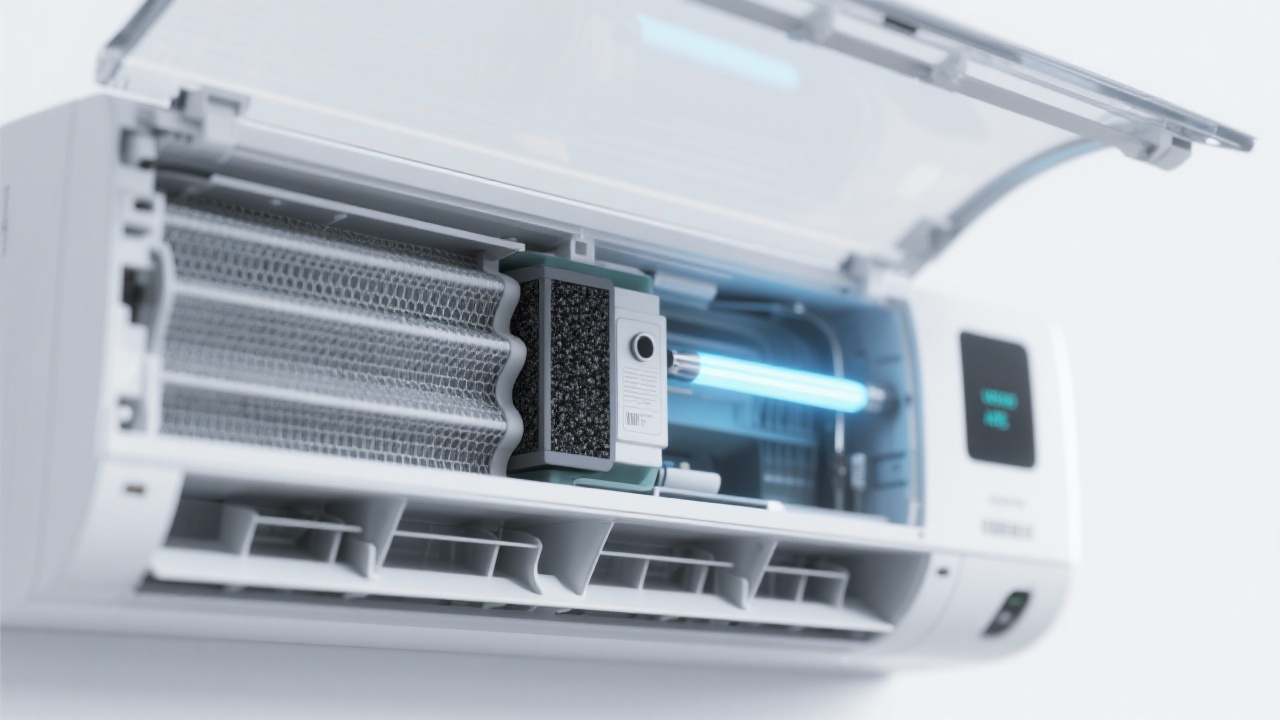
Modern air purifiers often combine multiple filter stages to cover a broad spectrum – eliminating particulates, volatile organic compounds (VOCs), and odors comprehensively. For example, a purifier customized with OEM/ODM options can be tailored with enhanced carbon filters for regions with high indoor air chemical contaminants.

Quiet operation is indispensable, especially for bedrooms or offices where concentration or rest is vital. Look for models featuring ultra-silent fans operating below 30dB, ensuring that your environment stays peaceful without sacrificing purification performance. Meanwhile, energy-saving modes adjust fan speed automatically, optimizing electricity consumption during low pollution periods.
For busy professionals, smart air purifiers equipped with remote control, real-time air quality monitoring, and programmable schedules can fit seamlessly into daily life – allowing you to maintain fresh air effortlessly from your smartphone.
Imagine a newborn's room compromised by pollutants from nearby construction dust or residual formaldehyde from fresh paint. Selecting an air purifier with high CADR and multi-stage filtration that targets PM2.5 and VOCs will create a safe breathing environment. Likewise, office spaces with multiple occupants benefit from purifiers that cycle air frequently and notify you of quality drops in real time.
These solutions reduce the invisible health risks and enhance comfort. They also prevent unnecessary power consumption, supporting sustainable living and lowering operational costs.
Do you know your living or working space’s exact size and what pollutants concern you the most? Leave a comment below sharing your room size and the air quality challenges you face. Let’s discuss tailored solutions that fit your needs perfectly.
 140
|
140
|
 outdoor waterproof security camera
two-way audio communication
remote monitoring efficiency
cloud storage backup
PTZ control
450
|
IP66 waterproof security camera
IP67 outdoor CCTV camera
IEC 60529 ingress protection rating
full-color night vision camera
AI human detection surveillance
166
|
smart lock unlocking methods
fingerprint recognition locks
bluetooth smart locks
access control security
multi-method unlock synergy
92
|
air purifier selection guide
CADR value room matching
indoor air quality management
smart air purifier features
home and office air purification
455
|
multi-layer air purification
HEPA filter performance
indoor air quality improvement
automatic humidity control
intelligent inverter air conditioner
outdoor waterproof security camera
two-way audio communication
remote monitoring efficiency
cloud storage backup
PTZ control
450
|
IP66 waterproof security camera
IP67 outdoor CCTV camera
IEC 60529 ingress protection rating
full-color night vision camera
AI human detection surveillance
166
|
smart lock unlocking methods
fingerprint recognition locks
bluetooth smart locks
access control security
multi-method unlock synergy
92
|
air purifier selection guide
CADR value room matching
indoor air quality management
smart air purifier features
home and office air purification
455
|
multi-layer air purification
HEPA filter performance
indoor air quality improvement
automatic humidity control
intelligent inverter air conditioner