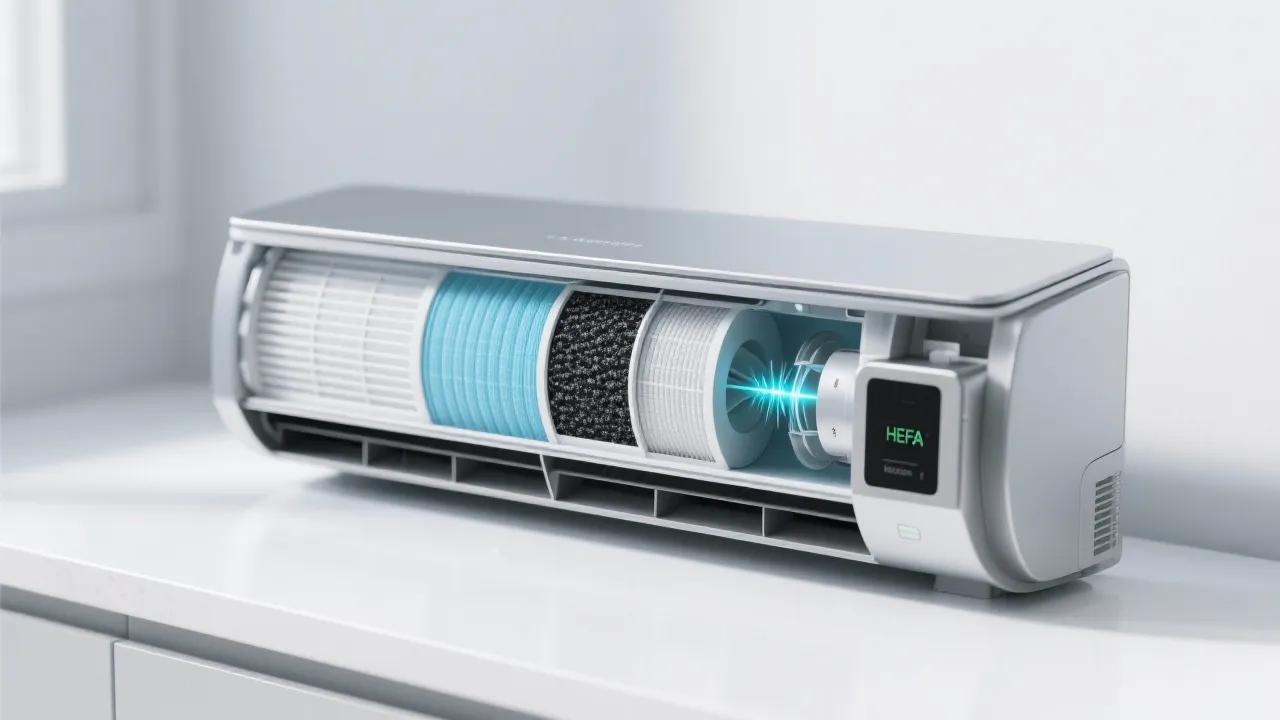

As modern households and commercial spaces increasingly prioritize tranquility and sustainability, the demand for energy-saving refrigerators with ultra-quiet performance has surged dramatically. Achieving noise levels below 38 decibels (dB) while maintaining efficient cooling requires a sophisticated blend of technical innovation and intelligent design. This article dissects the fundamental technologies driving silent operation—from dual inverter compressors to sound-dampening materials and airflow optimization—offering actionable insights for consumers and businesses alike.
Studies reveal that typical refrigerator noise ranges from 40 to 50 dB, roughly equivalent to ambient office chatter or a quiet suburb. However, with the proliferation of open-plan living areas and at-home offices, even subtle background hums are increasingly seen as distractions. Quiet operation—especially below 38 dB, akin to library noise—significantly enhances comfort by minimizing sleep interference and improving workspace focus.
“Since switching to a silent energy-efficient fridge, our night rest has noticeably improved,” reports a verified user from a recent consumer survey.
The dual inverter compressor is the centerpiece of noise reduction technology in today's refrigerators. Unlike conventional compressors that operate at fixed speeds, these compressors adjust their speed dynamically using variable frequency technology. This flexibility enables:
Empirical measurements indicate that dual inverter compressors can reduce sound emissions by up to 35% compared to traditional models, resulting in audible noise levels dipping below the critical 38 dB threshold.
Beyond the compressor, the refrigerator's structural design plays a pivotal role in minimizing noise:
Together, these measures act as a mechanical noise buffer, preventing structural resonance and producing a whisper-quiet environment.
Conventional air circulation systems often generate turbulent airflow, contributing significantly to operational noise. Smart wind domain engineering tackles this by:
Such aerodynamic refinements can reduce noise by approximately 28%, contributing substantially to the overall silent operation.
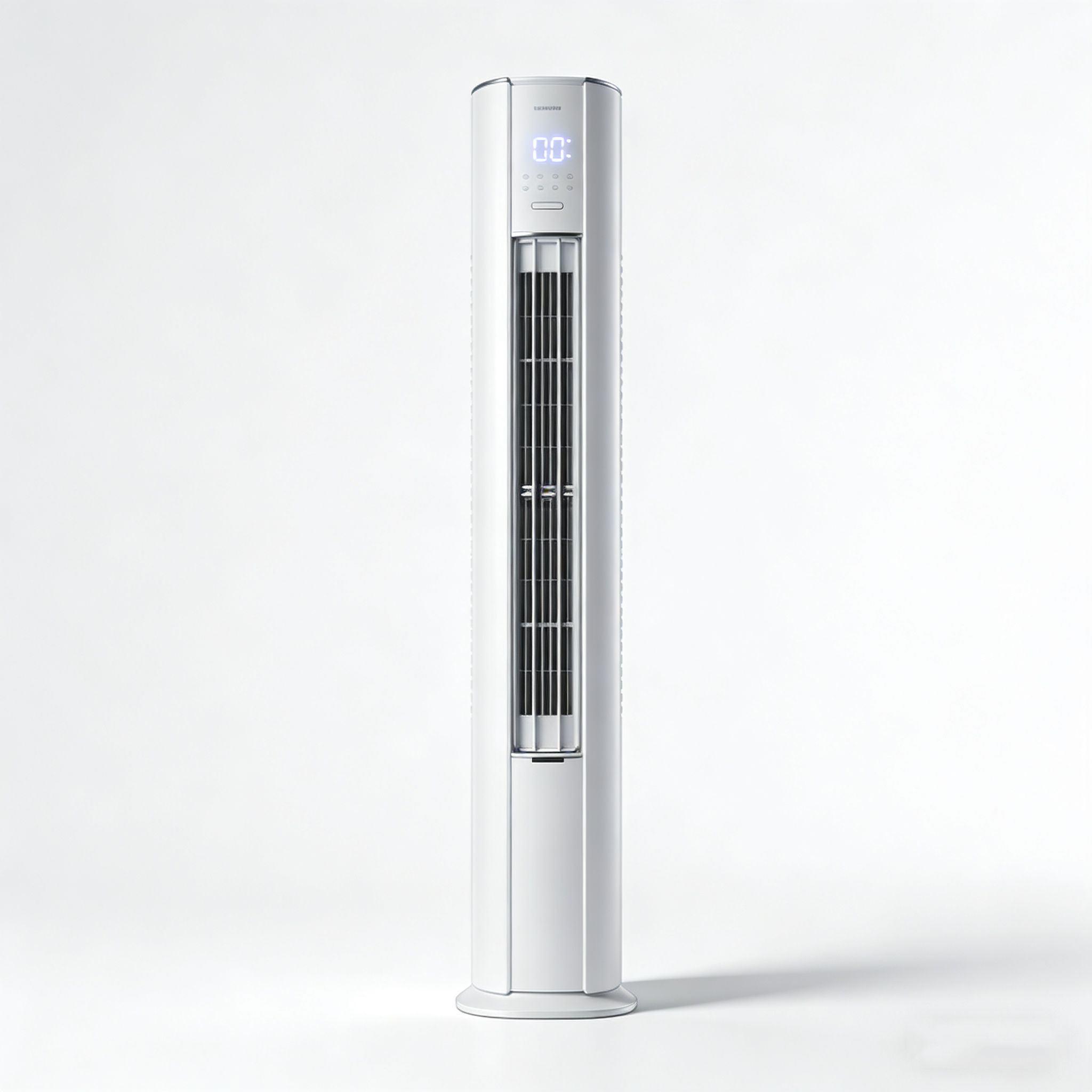
The fusion of these technologies translates into tangible benefits:
User testimonials highlight reductions from approximately 45 dB to below 38 dB, reaffirming these advantages.

Maximizing silent performance also depends on strategic placement and upkeep:
These simple yet effective measures enhance the ongoing silent and energy-efficient performance of the refrigerator.
Beyond mechanical innovation, integrating intelligent modules elevates user experience:
These intelligent integrations foster a seamless blend of convenience, sustainability, and comfort.



 192
|
192
|
 outdoor waterproof security camera
two-way voice communication
cloud storage backup
intelligent surveillance device
mobile app operation guide
71
|
Multi - layer air purification
HEPA filter purification effect
Indoor air quality improvement
Air filtration system
Intelligent inverter air conditioner
346
|
multi-layer air filtration
HEPA filter efficiency
indoor air quality improvement
PM2.5 removal technology
air purifier maintenance
248
|
smart PTZ camera installation
360 degree surveillance setup
AI motion detection configuration
night vision camera settings
multi-user access control
392
|
smart PTZ camera installation
360 degree surveillance setup
cloud camera angle adjustment
AI motion detection tuning
night vision optimization
outdoor waterproof security camera
two-way voice communication
cloud storage backup
intelligent surveillance device
mobile app operation guide
71
|
Multi - layer air purification
HEPA filter purification effect
Indoor air quality improvement
Air filtration system
Intelligent inverter air conditioner
346
|
multi-layer air filtration
HEPA filter efficiency
indoor air quality improvement
PM2.5 removal technology
air purifier maintenance
248
|
smart PTZ camera installation
360 degree surveillance setup
AI motion detection configuration
night vision camera settings
multi-user access control
392
|
smart PTZ camera installation
360 degree surveillance setup
cloud camera angle adjustment
AI motion detection tuning
night vision optimization